
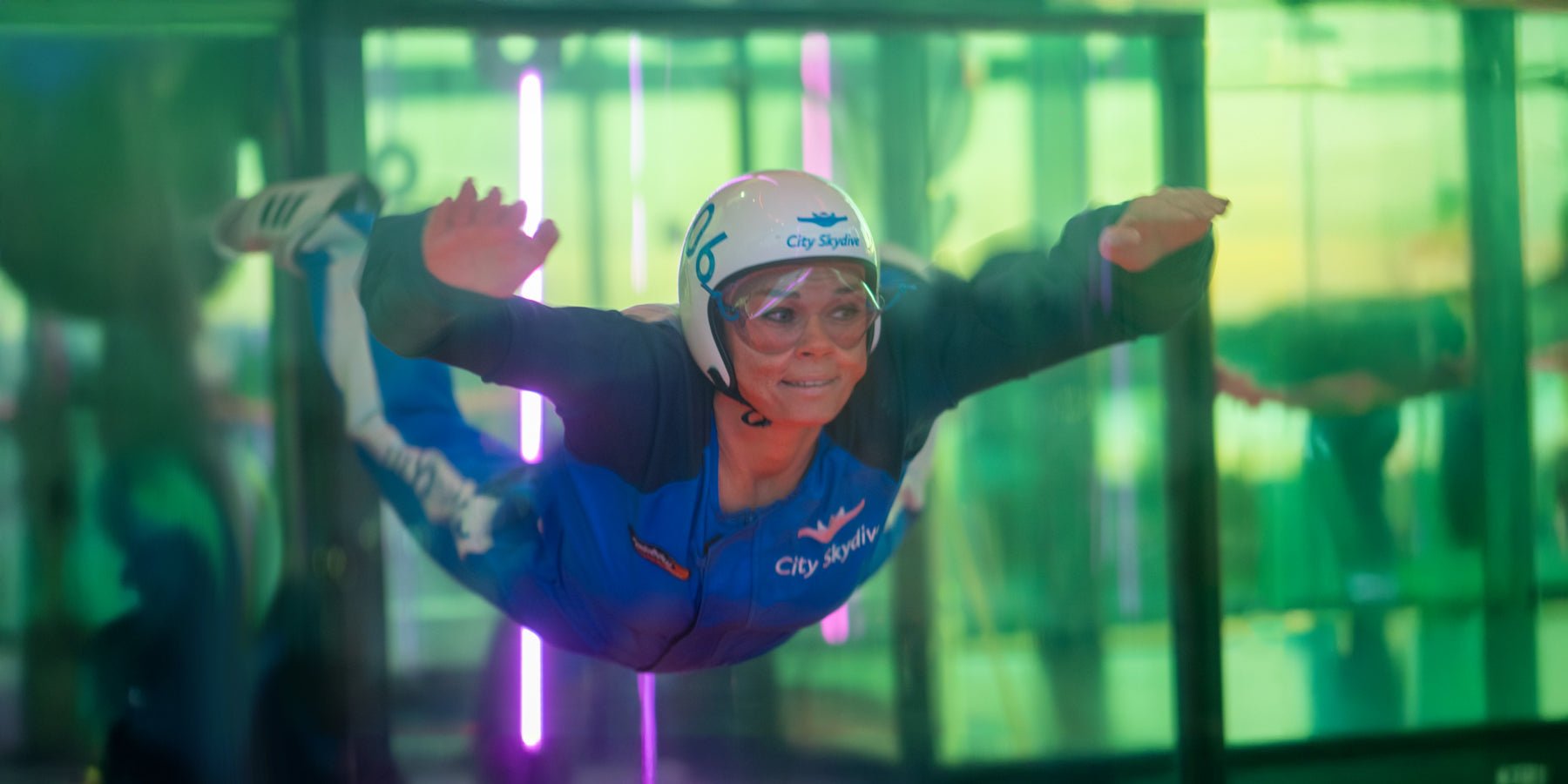
Your adventure begins even before you see the wind tunnel. You'll receive a short briefing with gestures the instructor uses inside, then you'll don a flight suit, helmet, goggles, and earplugs. The airflow initially feels like walking against a strong sea breeze. Many people are primarily impressed by the sound and power for the first five seconds, but they quickly realize that the air carries you when your body is relaxed.
An instructor stands by you the entire time, keeping you stable. You learn to float on your chest and hips, with small adjustments through your legs and arms. Don't think of "up" or "down" like in an elevator; you're working with the air, not against it. One reader told me she didn't truly dare to smile until her second flight, precisely when she felt how a tiny nudge with her toes shifted her position.
Prepare smartly without stress
Choose comfortable, fitted clothing without loose ties. Sneakers with laces are ideal. Remove jewelry and tie long hair back. Wear soft contact lenses rather than glasses, although some glasses can fit under skydiving goggles. Bring a hair tie or hairnet and make sure your pockets are empty.
Eat lightly, like yogurt or a banana, and drink plenty of water. Alcohol and heavy meals shortly before your session will hinder your progress. Arrive well in advance so you can get through the briefing and changing in peace. Up-to-date house rules, age limits, and frequently asked questions are clearly explained on City Skydive .
Technology that helps you immediately
The basic position
Imagine you're lying on an invisible water mattress. Lift your chin slightly, look at the instructor, and keep your hips slightly lower than your chest. Legs relaxed and bent, feet slightly apart. Arms in an open U-shape, elbows low. Small, slow movements work better than large ones.
Learn hand gestures
You communicate with gestures: chin up or down, legs extended or bent, arms slightly wider or narrower. Practice these gestures in the locker room. Once you recognize them, much of the tension disappears and you can start having fun more quickly.
Relax and breathe
Breathe rhythmically through your mouth, as if you were gently blowing on a window. A relaxed jaw and shoulders help you fly more steadily. Smiling really works; your face relaxes naturally, and your body follows. If something feels unsettling, halve your movement size and slow it down.

Safety and health
When to postpone
If you have recent shoulder or back pain, an injury, or are pregnant, consult a doctor and the organizers. People with serious heart or lung problems are advised to seek medical advice. Bring medication information if relevant.
Children and age
Children can often participate from a certain minimum age and with permission from a parent or guardian. A short warm-up, clear instructions, and a short initial flight work best for kids. Make it playful and keep expectations light.
After your session
Drink water, gently stretch your shoulders and hips, and allow yourself to relax for a moment. Many beginners find that the second or third flight feels the most relaxing. Make a note of what went well and what you'd like to try next time, such as a more stable takeoff or slightly more altitude control.
Smart planning for rest and fun
If you want a calmer atmosphere, choose times outside peak hours. Weekday mornings are often quieter than Saturdays. Go with a small group so everyone can film each other and share tips. Agree on a simple focus for each person, such as "chin up" or "arms still." This keeps things fun and organized.
Make it a mini ritual. Tie your shoes, pat the suit smooth, take two deep breaths, and only then step into the airflow. Those few seconds of preparation give you a sense of control that immediately carries you into the tunnel. Most beginners are surprised how quickly it feels familiar once they stick to this routine.
With clear preparation, a few basic techniques, and realistic expectations, your first indoor skydive won't be a leap into the unknown, but a controlled introduction to flight. The air does the hard work; you just have to listen, feel, and steer gently.
Image: City Skydive






Interesting? Share with someone:
Lichter lopen: zo geef je je voeten meer comfort
How to choose a chalet that suits your lifestyle