
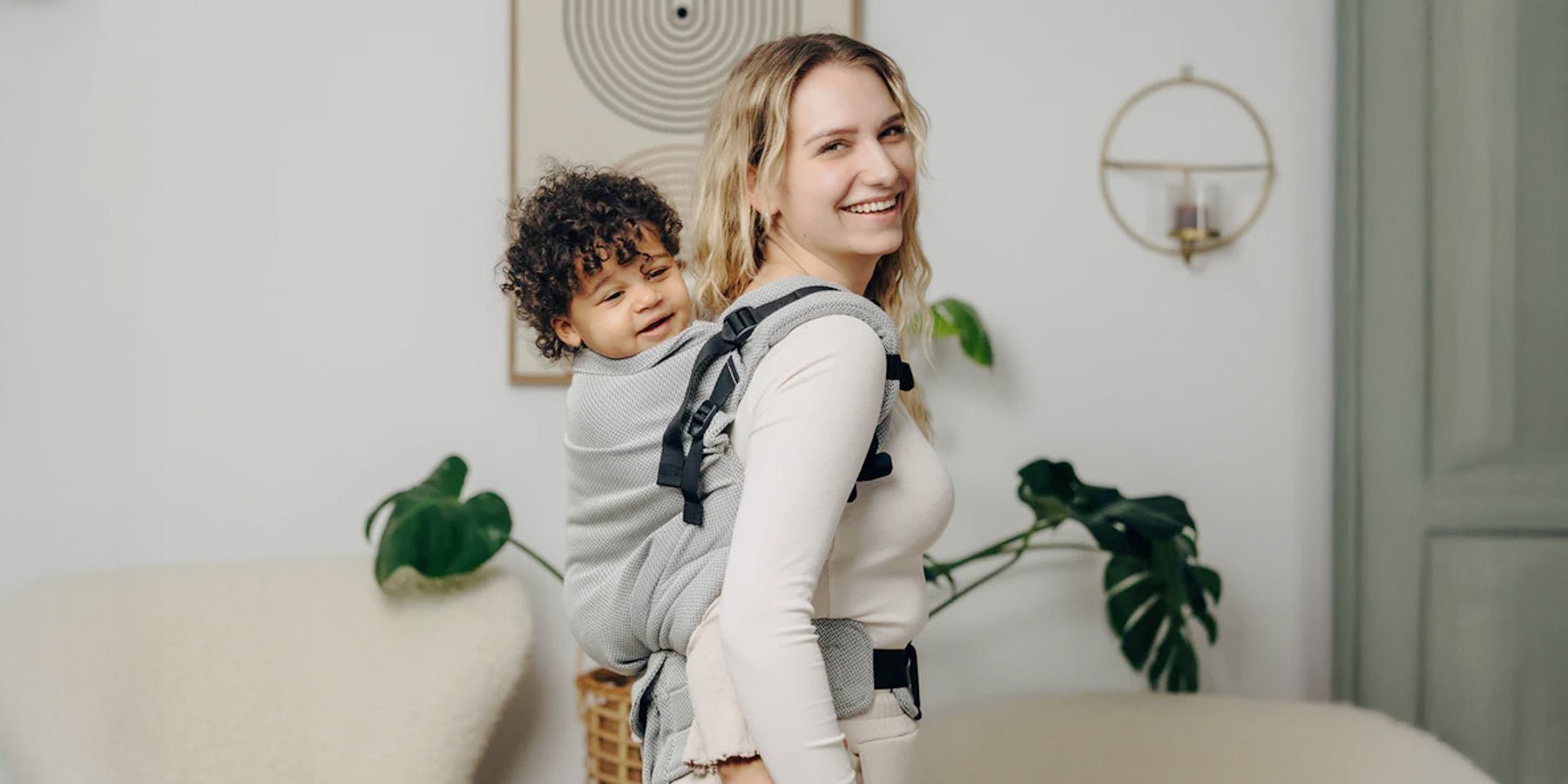
Many parents think carrying stops once their child can walk. Yet, you quickly realize that toddlers still find long distances quite challenging. An afternoon in town, a festival, a walk in the woods, or a busy day at the zoo, and you'll be walking with a child on your hip, a bag on the other arm, and sore shoulders at the end of the day.
Carrying can be a relief. Your toddler gains peace and perspective, you keep your hands free, and you both move smoothly through busy situations. It's also a nice way to provide some extra closeness when your child is tired, overstimulated, or just very cuddly. Many parents find that their child calms down more quickly when they're close, with the familiar rhythm of their breathing and heartbeat nearby.
Plus, it's practical. In an old city center with a child, bag, stroller, and steps, everyone gets grumpy. With a good toddler carrier, you can keep everything compact and navigate cobblestones, stairs, and narrow shops without any hassle. It's that combination of convenience and connection that makes toddler carrying so appealing.
When is toddler carrying really a solution?
No two families are the same, but there are a few situations where almost every parent is glad to have a babywearing option nearby. Think of vacations, long layovers at the train station, or navigating a busy shopping street with a child who's just about done walking.
Even for short, practical moments, carrying offers peace of mind. A quick trip to the bakery, a walk with the dog, or picking up an older child from school suddenly becomes much more relaxing. You don't have to grab a stroller, no need to argue about "I'm tired" in the middle of the sidewalk, and you can still walk at a normal pace.
And then there are those days when everything is just a little too much. A busy daycare center, a birthday party with lots of people, or a day full of stimuli. For some children, a carrying moment acts like a reset button. A head against your shoulder, a few swaying steps, and you literally feel the tension melt away from their bodies.

Comfortable wearing: what should you pay attention to?
Carrying a toddler is all about comfort for both of you. A common mistake is for parents to keep using their old baby carrier even though their child has grown considerably. This often results in long legs dangling down, a back panel that's too short, and straps that dig into your shoulders. That's not comfortable for anyone, especially if you're traveling for a longer period.
A good toddler carrier supports from knee to knee and offers enough back height so your child sits securely but can still see around. A wide, well-padded hip belt is important for you so the weight isn't solely on your shoulders. Experimentation is key: every body is different, and what fits your girlfriend perfectly might be too tight for you.
For the stomach or the back?
With babies, front carrying is often the preferred option so you can keep a close eye on your little one. With toddlers, this changes. Their weight is often more easily distributed when carried on the back, especially on longer walks. Many parents also find this more comfortable in crowded places, as it keeps their hands and vision free.
Yet, a belly carry is still very cozy, especially at home or for short distances. Think of a tired toddler who's not quite himself by the end of the afternoon. Just being close to you can make the difference between a meltdown and a peaceful transition into the evening.
How long can you keep wearing it?
There's no set age at which you "should" stop carrying. It depends on your bodies, your fitness level, and especially whether you both still enjoy it. Some children still regularly ask to be carried at four after a long day, while others primarily want to walk independently at two. As long as you respect your own limits and maintain an ergonomic posture, anything is possible.
Toddler carrying in everyday life
The beauty of toddler carrying is that it weaves seamlessly into your everyday life. You don't have to make it a big project. A carrier can simply hang next to the coat rack, ready for when that short trip to the supermarket does end up with a tired child who needs to be picked up.
At home, a baby carrier can also be a solution. A child who's a bit lethargic due to a cold or a developmental leap often wants to be with you a lot, while you might want to cook a simple meal. With your child on your back, you can still get things done without having to carry them with one arm all the time. Many parents find that such practical solutions take a lot of the pressure off their day.
Stimuli, high sensitivity and proximity
For sensitive children, carrying can feel like a safe cocoon. Sounds are muffled, vision is limited, and your body acts as a kind of base station. Think of a busy event, fair, or open house at school. While a stroller can sometimes provide even more stimulation, looking out from your back above the crowd is often more relaxing.
It can also be comforting for parents to feel their child close in busy situations. You hear their comments, can respond immediately, and more quickly recognize when they're reaching their limit. This makes it easier to schedule breaks or go home early without everyone overstepping their boundaries.
Safety and small habits that make a big difference
A relaxed carrying experience starts with a few simple habits. Always check that the seat isn't bunched up under your buttocks, that the hip belt is securely fastened, and that the shoulder straps aren't twisted. A small adjustment can make a big difference in comfort. Take the time to properly adjust the straps before you leave the house, especially if you both prefer different positions.
Also pay attention to clothing. Layers are helpful for your child, as it's warmer against your body than in a stroller. A thin hat is recommended for windy or sunny weather, and thick, slippery snowsuits are not recommended in the carrier, as they can compromise the fit and safety. For yourself, sturdy shoes and a jacket that allows you to move freely are a small investment in comfort.
Respecting boundaries, from both of you
Carrying should never become a necessity. Some days your back won't cooperate, or your child simply wants to do everything themselves. That's just as okay as a day when you both reach for the carrier repeatedly without thinking. Think of it as an extra tool in your toolbox, one you use when the moment suits you.
Many parents find that toddlerwearing isn't just practical, it also creates beautiful memories. Those sleepy heads against your shoulder after a long day, the conversations you have while walking together, the feeling of being able to be that safe haven a little longer, even when your child is already quite active. That might just be the real magic of toddlerwearing.








Interesting? Share with someone:
Why a swimming pool at home brings so much happiness
How to make your home a place where you can truly relax